The maritime industry is currently at the most critical stage in its evolutionary journey from sail to steam. Earlier revolutions relied on coal and oil, but data is transforming how vessels are perceived and operated.
For decades, professionals asked, “Where is my ship?” Today, they ask, “What is the cargo status, and how can data improve profitability?”
Real-time cargo tracking helps shipowners monitor performance, optimize operations, and stay competitive in freight markets.
The Strategic Shift: From Vessel Tracking to Cargo Visibility
Traditional shipping faced information gaps between vessel departure and destination terminal arrival.
AIS gives shipowners estimates of vessel location, condition, and cargo status during voyages.
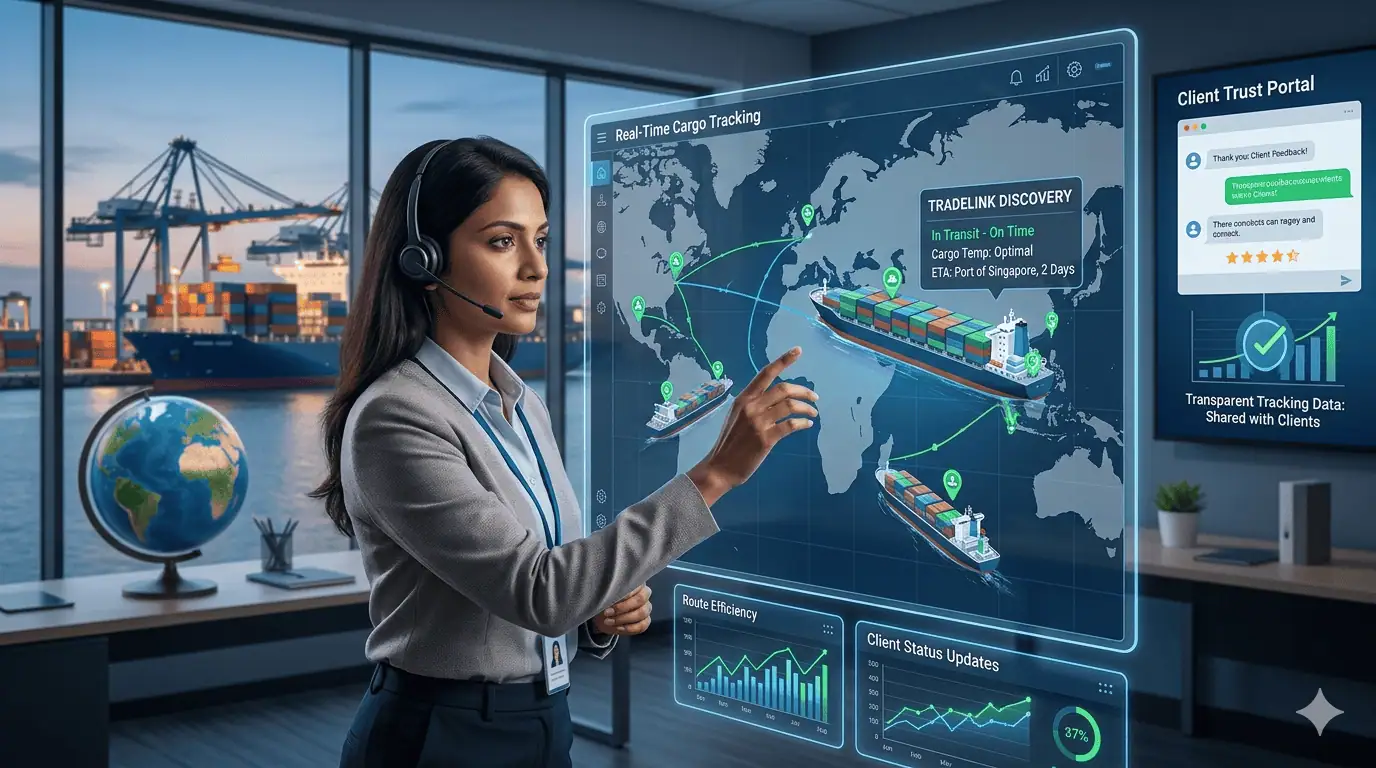
Real-time cargo tracking Advanced digital technologies now bridge the gap, continuously tracking cargo location, environment, and conditions.
The Value Proposition: Trust as a Competitive Asset
In the B2B maritime sector, trust is the most valuable currency.Reliable chartering ensures safe, timely shipments, supporting efficient operations and preventing costly logistics failures.
When a charterer chooses a shipowner, they are essentially entrusting millions of dollars in assets to a third party. By providing a transparent window into the voyage, shipowners can differentiate themselves from “silent” competitors.
Several factors have driven this shift:
The Stakes Are Higher
External factors like congestion, canal disruptions, and geopolitical rerouting can significantly derail planned voyages.
Clients increasingly expect early warnings about delays and emergencies before they disrupt operational efficiency.
Real-Time Data Is Now The Norm
Charterers expect maritime tracking to match the real-time visibility available in road and air freight.
A data-driven charterer will no longer invest in a voyage that requires them to check back in 48 hours.
Data Is A Lever In Disputes
Damaged or delayed cargo or one that doesn’t meet the specifications can impede a smooth relationship between the charterer and ship owners. In most cases, the conflict arises as each party presents its version of data related to the timeline followed by the charterer.
Shipowners with robust and continuous tracking data are in a far stronger position to establish responsibility and protect their reputation.
Cargo tracking supports navigation while helping shipowners retain clients through better visibility and service.
5 Ways Cargo Tracking Builds Client Trust Directly
Cargo visibility has always been a key operational concern. A global survey of 200 charterers found that 57.4 % of shippers are reluctant to work with carriers that cannot provide live shipment tracking. This reinforces that real-time visibility is no longer a premium feature but a baseline service expectation.
Eliminating Information Asymmetry
Information asymmetry occurs when shipowners hold more information than charterers, creating an unequal commercial advantage.
Fragmented data creates silos that increase shipment risks and complicate marine operations.
A McKinsey report found that 85% of shippers demand visibility, where cargo tracking plays a critical role. It helps address delays in delivery by providing real-time updates about a ship’s status, which reduces uncertainty.
This ultimately turns a shipowner into a reliable logistics partner that can be trusted to deliver what it promises without the usual hiccups.
Platforms like Shipsearch gather data from multiple sources to streamline logistics and increase precision in marine operations.
Digital Transparency in Vessel Chartering
Modern charterers, especially those in the energy and pharmaceutical sectors, increasingly demand digital integration. This is because they transport high-value cargo that is extremely sensitive to external conditions, such as temperature, humidity, or atmospheric pressure.
Awareness of cargo conditions and location throughout the voyage allows charterers to anticipate potential disruptions like weather delays or customs and take proactive steps to minimize the impact.
This has made transparency a sought-after concern, where shipowners that offer digital integration and real-time monitoring are at an advantage over those that don’t.
Data-Backed Performance Reporting Strengthens Renewals
Once a voyage or charter period ends, shipowners need to report how the vessel performed in terms of key metrics.
This includes the voyage timeline as well as port turnaround times, ETA accuracy, and fuel efficiency. Shipowners who can account for these details not only satisfy charterers about the progress of the voyage but also lay stronger claims to contract renewals than those who can only offer verbal assurances.
Performance data serves as real evidence that can faciliate objective assessments of a voyage’s success, paving the way for long-term commercial relationships.
Transparent Voyage Records Reduce Disputes
The shipowner-charterer relationship is traditionally prone to disputes. Several factors can
Laytime disputes, cargo damage claims, and deviation allegations are among the most common — and expensive — friction points in the shipowner-charterer relationship. In most cases, they come down to a data problem: whose version of the timeline is accurate?
Shipowners with continuous, timestamped AIS and voyage records have a clear view of the operations. Since everything is on record, from port arrival times and anchorage periods, speed profiles, and cargo handling, the data removes any sources of misunderstanding that might have led to legal battles.
Proactive ETA Communication Reduces Anxiety
The ship owner and charterer relationship thrives when there is a steady flow of information across the voyage length. Transparency isn’t simply about arriving early but about keeping the charterer informed about any potential changes that might affect on-time delivery performance.
Using AIS-integrated ETA forecasting allows shipowners to convey updated arrival windows in case of a deviation from the expected milestones. To the charterer, this demonstrates that shipowners retain operational control and are working proactively to avoid downtime.
A message that arrives after the fact demonstrates that they are not well-equipped to handle disruptions.
Incident Response Builds Confidence Under Pressure
How a shipowner responds to a disruption tells a charterer more about their reliability than a smooth voyage ever could. When something goes wrong — a deviation, an unplanned port call, a cargo issue — the quality of the communication and the speed of the response define the relationship.
Shipowners with strong tracking infrastructure can detect anomalies early, communicate them clearly, and demonstrate what steps are being taken to resolve them. Charterers who experience this kind of managed transparency during a difficult voyage often become the most loyal long-term clients.
The Technology Behind Modern Cargo Tracking
Understanding the technology stack helps shipowners make informed decisions about which tools to invest in and what level of visibility they can realistically offer clients.
AIS (Automatic Identification System)
AIS is the backbone of maritime tracking. All commercial vessels above 300 GT are required to carry an AIS transponder, which broadcasts the vessel’s identity, position, speed, course, and navigational status.
A terrestrial receiver installed on ships allows AIS to provide regular updates when the vessel is in proximity to coastlines and busy shipping lanes.
Satellite AIS curtails the transmission time to under one minute when the vessel is in the open sea. This enables ship owners to get visibility into the real-time position of the vessel, which subsequently facilitates tracking various other features.
GPS and Satellite Communications
While AIS is the broadcast standard, GPS-enabled satellite communication systems have greatly improved navigation and positioning in marine transport.
These systems combine multiple technologies to transmit critical voyage data related to speed, fuel consumption, and ETA updates to teams ashore and charterer-facing dashboards.
By establishing a communication link between the two, GPS data turns raw position data into actionable voyage intelligence to guide rational decision-making.
IoT Sensors
Vessels transporting high-value or sensitive cargo such as refrigerated goods, chemicals, project cargo, and pharmaceuticals rely on IoT sensors.
These advanced sensors go beyond position tracking by adding a layer of monitoring conditions related to a given voyage.
This includes an array of environmental conditions like temperature, humidity, shock events, and container seal status to ensure real-time monitoring in case conditions deviate from agreed parameters.
This is particularly appealing to shipowners who have to handle specialized cargo where condition-on-delivery is as important as timing.
Voyage Management Platforms
Modern voyage management systems aggregate AIS data, weather routing, port ETA forecasts, and performance analytics into a single dashboard. These platforms are where the raw data becomes client-ready reporting — the kind of transparency that turns a one-time charterer into a repeat client.
What Charterers Actually Want from Tracking in 2026
The freight market is rapidly evolving, with charterers expecting modern cargo tracking to demonstrate four features:
Accuracy Over Frequency
A reliable ETA update once a day is more valuable than five inaccurate ones. Charterers who have been burned by optimistic ETAs are increasingly skeptical of platforms that update constantly without predictive accuracy.
Proactive Alerts
Checking portals is not only frustrating but also makes the whole process troublesome. When key milestones in the voyage are automated, such as vessel departure, arrival at anchorage, or start of discharging, it signals that the shipowner is in complete control of the voyage while reducing the burden on charterers’ operations teams.
Single-Source Access
Charterers managing multiple voyages across multiple owners don’t want to log into a different system for every vessel. Shipowners who can integrate their tracking data into platforms charterers already use, or provide clean API feeds, remove a friction point their competitors haven’t solved.
Condition Data For Sensitive Cargo
Certain types of cargo require strict temperature conditions or careful handling to avoid damage. For these use cases, tracking merely a ship’s position is not enough, as charterers expect continuous monitoring to maximize operational efficiency.
The Business Case: Tracking as a Commercial Investment
The operational cost of implementing robust cargo tracking — AIS data subscriptions, satellite communications, voyage management platforms — is modest compared to the commercial return.
Consider the alternative cost: a single significant laytime dispute, a cargo damage claim that could have been defended with better data, or a charterer who doesn’t renew because they felt they were operating blind during the voyage. Any one of these outcomes typically costs far more than a year’s worth of tracking infrastructure.
The more precise business case looks like this:
- Dispute reduction: Timestamped voyage records significantly reduce the time and legal cost of resolving laytime and performance claims.
- Retention value: Charterers who receive proactive tracking communication churn at lower rates, whereas visibility builds switching costs in your favor.
- Operational efficiency: Real-time position and performance data help shipowners optimize routes, reduce fuel waste, and arrive just-in-time — savings that compound voyage over voyage.
- Premium positioning: In a competitive freight market, shipowners who demonstrably offer superior visibility can command better rates from charterers who value reliability over the lowest fixture price
Common Cargo Tracking Gaps Shipowners Should Close
Sometimes, it’s not the lack of technology itself that creates visibility gaps but rather how the technology is used.
Gap 1 — Open ocean blind spots
Terrestrial AIS has a limited range. Relying on it as a single source of data can cause shipowners to lose visibility once the vessel crosses coastal waters.
Satellite AIS bridges this gap, making it non-negotiable in deep-sea trades.
Gap 2 — No proactive communication layer
Having AIS data internally will hardly make a difference if it is not shared with charterers. Shipowners with advanced tracking abilities can violate client trust if they are not good at communicating.
Both parties can mutually discuss an appropriate mechanism to deliver data, be it automated alerts, client portals, or regular voyage reports.
Gap 3 — Port call dead zones
At particular points in port operations, the tracking systems can fall into a blind spot. This is likely to happen when the berth arrives, during loading or discharge processes, and when a vessel sets for departure.
Tracking that covers sea passages but drops out in port creates exactly the kind of uncertainty clients find most frustrating.
Gap 4 — No historical data retention
You may track large amounts of data rigorously, but it would hardly serve the purpose if it were not properly stored or retrieved. Shipowners who wish to maintain leverage in disputes should archive their data in a format that can be utilized as evidence if needed.
Conclusion
In maritime shipping, reliability has always been the foundation of client trust. Shipowners who deliver cargo on time, communicate clearly, and resolve problems professionally retain clients. Those who don’t lose them — quietly, without explanation, to a competitor who does.
What cargo tracking for shipowners does in 2026 is make reliability visible. It converts the intangible quality of “this owner is dependable” into demonstrable, timestamped, shareable evidence that a charterer can see, share with their operations team, and build their supply chain around.
The shipowners who invest in visibility infrastructure today are investing in the commercial relationships that will define their fixture pipeline for the next decade.
FAQ
What is cargo tracking for shipowners?
Cargo tracking for shipowners is the real-time monitoring of a vessel’s position, voyage milestones, and cargo status from the point of loading through to final discharge. It enables shipowners to share accurate, timely visibility with charterers and cargo interests, reducing disputes, improving communication, and building the kind of operational trust that drives repeat business.
How does AIS support cargo tracking for shipowners?
AIS (Automatic Identification System) is the core technology behind maritime cargo tracking. It broadcasts a vessel’s position, speed, course, and identity in real time, with terrestrial AIS covering coastal waters and satellite AIS providing coverage in the open ocean. Shipowners use AIS data to monitor fleet positions, generate accurate ETA forecasts, and provide charterers with transparent voyage updates throughout the passage.
Why does cargo visibility matter for client trust?
Charterers make downstream supply chain decisions based on when a vessel will arrive. Shipowners who provide accurate, proactive tracking updates enable charterers to plan better, reduce their operational risk, and avoid costly disruptions. When visibility is reliable, charterers trust the shipowner — and trust translates directly into charter renewals and long-term commercial relationships.
What cargo tracking technologies should shipowners invest in?
The core stack for most shipowners includes satellite AIS for global position coverage, GPS-enabled satellite communications for voyage reporting, and a voyage management platform that aggregates tracking data into client-ready dashboards. For specialized cargo, IoT condition-monitoring sensors add an important layer of transparency around temperature, humidity, and cargo integrity throughout the voyage.
How does cargo tracking reduce disputes between shipowners and charterers?
Most laytime and performance disputes come down to conflicting accounts of the voyage timeline. Shipowners with continuous, timestamped AIS and voyage records can produce objective evidence of when the vessel arrived, how long it waited at anchorage, when operations commenced, and when discharge was completed. This data resolves disputes faster, at lower legal cost, and with less damage to the commercial relationship.
Can cargo tracking help shipowners win new business?
Yes. In a freight market where many shipowners compete on price alone, those who can demonstrate superior tracking and communication infrastructure differentiate themselves on service quality. Charterers who have experienced poor visibility with other owners — or who have paid for laytime disputes that better data could have prevented — actively seek out operators who prioritize transparency.
- “AIS” first mention → shipsearch.com/what-is-ais-ship-tracking/ | anchor: AIS (Automatic Identification System)
- “vessel charter” in intro or business case → shipsearch.com/vessel-charter/ | anchor: charter renewals
- “available cargos” in charterer expectations section → shipsearch.com/available-cargos/ | anchor: available cargos
- “How to Charter a Vessel” guide → shipsearch.com/how-to-charter-a-vessel-complete-guide/ | anchor: shipowner-charterer relationship
External Authority Links:
- IMO AIS requirement reference → imo.org | anchor: required to carry an AIS transponder
- EU ETS / maritime compliance mention → emsa. europa.eu | anchor: geopolitical rerouting