
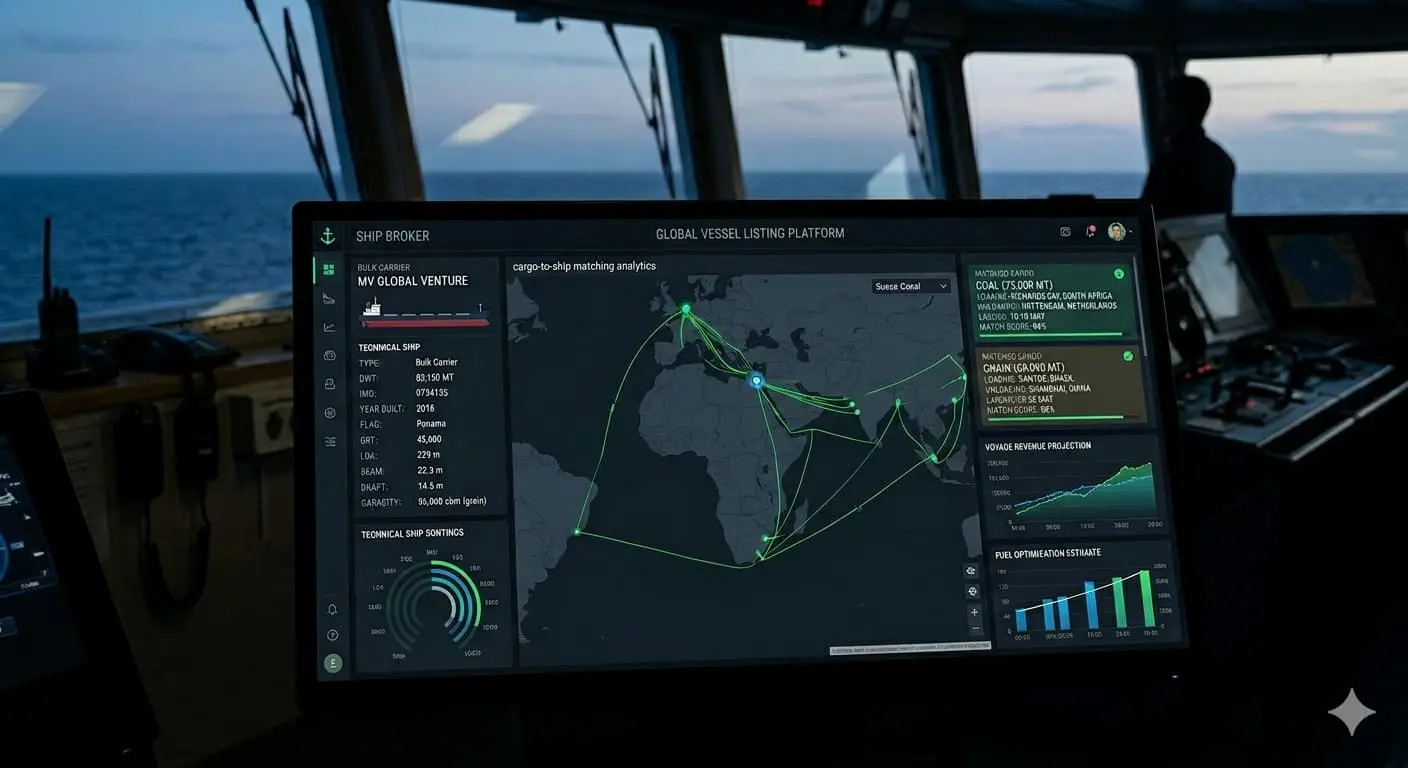
As we enter 2026, the maritime industry is at a threshold in its digital transformation journey. The existing landscape is more fraught than ever under the influx of a growing list of challenges from decarbonization, digitalization, and crew shortages to geopolitical complexity and tightening regulations.
A vessel listing platform or digital marketplace is the new operational reality for transactions related to the buying and selling of commercial ships.
This has enabled ship brokers to deploy centralized data management and automated processes to better respond to a changing market and client requirements.
The Shift in How Vessels Are Found
The traditional vessel discovery process went through multiple channels, like inboxes, spreadsheets, and relationship networks. Lacking access to the right broker meant making back-to-back calls until you find the right person.
The industry is fast-moving to a digital way of working, as owners and operators expect clear, measurable value. Digitization offers exciting prospects: time savings, agility, reduced intermediaries, and data-driven processes that directly strengthen both top and bottom lines.
For ship brokers, this shift means one critical thing: your vessel listings are now a marketing and business development asset, not just internal records.
The question is no longer whether to list vessels digitally. It is whether your listings are structured, complete, and discoverable enough to compete in an increasingly digital marketplace.
Why Most Broker Listings Fall Short
Across the industry right now, the majority of broker listings share the following weaknesses:
Incomplete specifications
Most vessel listings don’t consist of important technical details like deadweight, beam, draft, cargo gear, class, and last special survey.
This forces the interested party to ask follow-up questions before they can even assess, and may even compel them to consider a competitor’s listing instead.
No structured format
Free-text email circulars or PDF attachments carry vessel information that is not searchable or filterable. These listings are compatible with cargo-to-ship matching algorithms increasingly used by charterers and their teams.
Missing commercial context
Most listings are devoid of a commercial context. In other words, they often lack or don’t explicitly feature essential commercial data that drives chartering decisions, such as Open dates, trading areas, preferred cargo types, and laycan windows.
No visual presence
Professional imagery and documentation are standard requirements in any high-value B2B market. Vessel listings convey the impression of a data record, lacking hotos, class certificates, and inspection reports that instill confidence in buyers.
The Strategic Benefits of Using a Digital Vessel Listing Platform
A purpose-built vessel listing platform is not simply a database. It can potentially provide the very basis or infrastructure for projecting a broker’s market presence.
It expands geographic reach
A vessel listed on a widely used online vessel listing platform is visible to all relevant stakeholders, including charterers, buyers, and current operators in markets.
The listing introduces the broker to potential brokers while letting him handle the subsequent negotiations.
It enables cargo-to-ship matching at scale
Advanced platforms use AI, machine learning, and real-time data from multiple databases for instant cargo-to-ship matching, connecting vessels to relevant cargo opportunities that would be invisible through traditional circular distribution alone. Brokers whose vessels are structured and searchable in these systems gain access to deal flow they would otherwise never see.
It creates a professional audit trail
A well-maintained vessel listing on a reputable ship sale and purchase platform communicates seriousness, transparency, and institutional credibility. Buyers increasingly expect documentation to be digitally accessible before they commit to inspection costs.
It compresses the transaction timeline
A vessel listing platform provides all the information that a charterer or buyer is possibly seeking, whether it’s full technical specifications, commercial terms, or supporting documentation.
This means fewer back-and-forth emails, so that it takes considerably less time to qualify with prospects for faster fixture. This lowers transaction costs for both sides.
It works while you are not working
Attending a phone call or a circular demands active attention. In contrast, a complete digital listing on a vessel database online works around the clock and across time zones. This ensures transactions continue uninterrupted even when the broker is not physically available.
AI-Driven Discovery and Digital Matching
Technology has added a layer to the market that traditional brokers often overlook: AI-driven search and matching. Unlike old-school circulars, a modern vessel listing platform uses structured data to feed AI matching engines.
This allows charterers to instantly find tonnage based on specific parameters rather than parsing through free-text emails. If your vessel isn’t listed on a structured platform, it effectively doesn’t exist for these high-speed digital search results.
2026 will belong to those who can clearly articulate value and leverage digital tools to lead smarter operations. For brokers, that begins with the listing itself.
What Should Be Included in a Vessel Listing?
Regardless of which vessel listing platform a broker uses, the anatomy of an effective listing follows the same principles:
- Complete technical specifications: Every critical field must be populated, including Flag, class, year built, DWT, GRT, and IMO number. Standardize your data for LOA, beam, and draft to ensure your vessel appears in filtered searches. void “on request” placeholders, as incomplete data often leads charterers to skip to a competitor’s listing.
- Current commercial availability: Clearly define the Open Date, Open Port, and Laycan window to provide immediate context for decision-makers. Including acceptable cargo types and trading limits allows charterers to quickly assess compatibility, reducing the need for redundant back-and-forth communication during the qualification stage.
- Supporting documentation: A high-performance listing includes instant access to Class certificates, P&I club details, and equipment specs. For S&P transactions, providing recent inspection reports or condition surveys builds institutional trust and allows buyers to commit to physical inspections with greater confidence and speed.
- High-quality imagery: Visual proof is essential for high-value B2B transactions. Include professional shots of the deck, bridge, engine room, and cargo holds to provide a transparent snapshot of the asset’s condition. High-quality imagery stimulates faster decision-making and sets a baseline for the vessel’s market value.
- Regular updates: Treat every listing as a live document rather than a static record. A listing without an update in 30 days signals a lack of commitment or inaccurate availability, which can destroy a broker’s credibility. Frequent status updates ensure your fleet remains visible and relevant to the market’s moving targets.
| Listing Element | Traditional Email Circular | Modern Vessel Listing Platform |
| Format | Unstructured Text/PDF | Searchable Structured Data |
| Visibility | Limited to Inbox | Global 24/7 Accessibility |
| AI Integration | None | Full Cargo-to-Ship Matching |
| Documentation | “On Request” (Delayed) | Instant Audit Trail (Immediate) |
Building the Strategy, Not Just Using the Tools
Choosing a vessel listing platform is the starting point in the digital-first strategy.
Brokers who built a strategic process around their digital listings, like standardized templates, update workflows, and a consistent presence, see maximum results compared to those that don’t.
Commercial performance and operational excellence act as interconnected levers, and organizations that harness interconnected data lay a robust foundation for continuous feedback and data-driven decisions.
Adopting a vessel listing platform is not merely a technology decision. It is a commercial decision about where and how you compete, how clients find you, and how you position each vessel to gain an edge in the market.
Ready to Digitize Your Vessel Listings?
A tonnage that stays invisible risks losing to a rapidly evolving market.
At ShipSearch, we provide the digital infrastructure that transforms your vessel records into high-performance marketing assets. Our platform ensures your listings are structured for AI discovery, visible to global charterers 24/7, and backed by the professional audit trails that modern buyers demand.
Audit your current fleet today. List on the fastest-growing vessel listing platform and ensure your vessels are seen by the right partners at the right time.
Explore ShipSearch today.