
Know What the Voyage Earns Before You Answer
A cargo lands in your inbox. You have a ship that could take it, and about ten minutes to decide whether it is worth doing. The ShipSearch voyage estimator answers that properly rather than approximately, vessel, route and cargo in; capacity, days, costs, CO2 and the two numbers the decision turns on out
What is a Voyage Estimator?
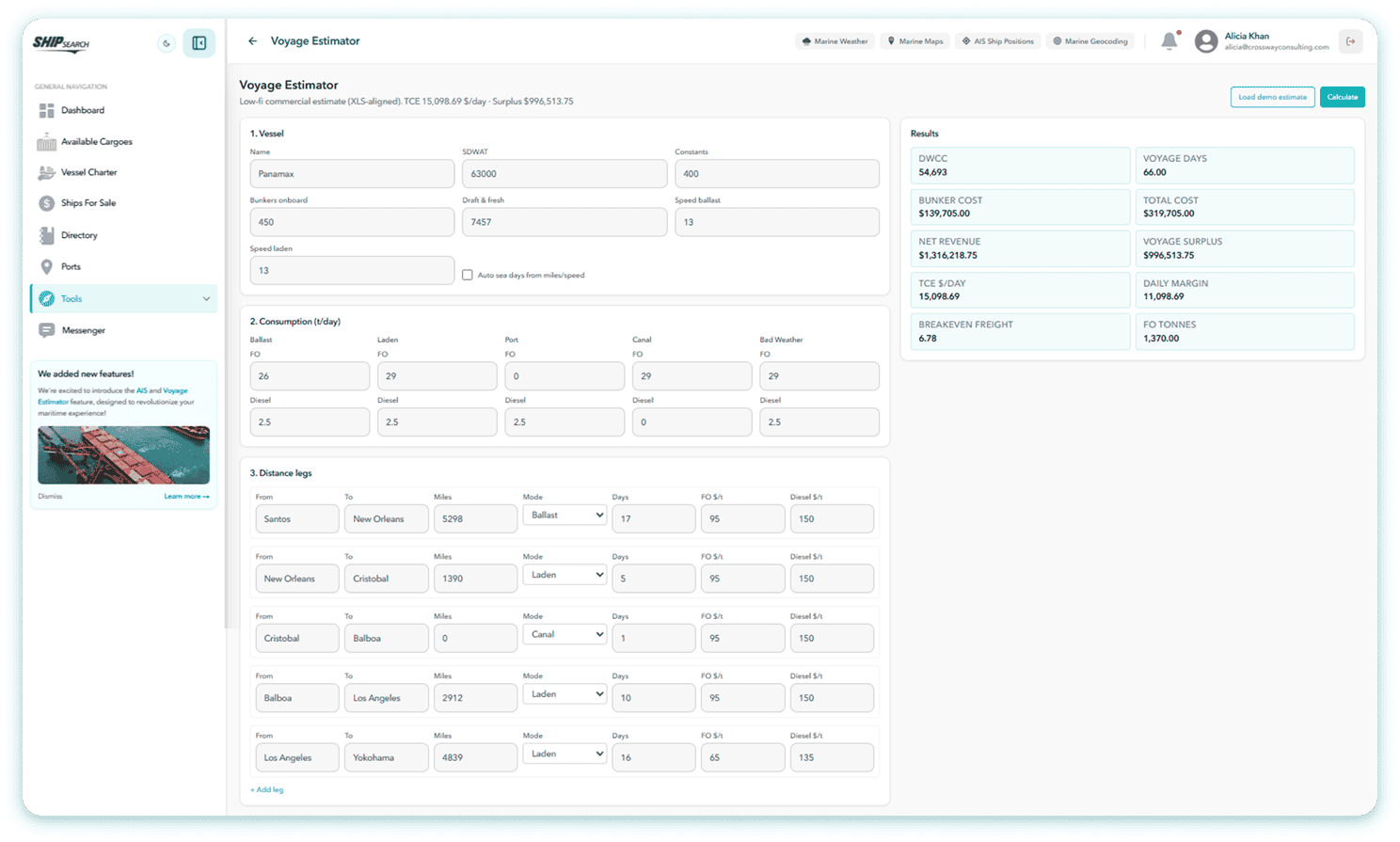
A voyage estimator calculates the profit and loss of a single voyage before it is fixed. It combines the vessel’s cargo capacity, speed and fuel consumption with the route’s distance, port and canal costs, and the freight and commission terms, then returns the result both as a total surplus and as a daily earning the time charter equivalent so a voyage can be compared with a period charter on the same basis.
What It Asks For
The Vessel
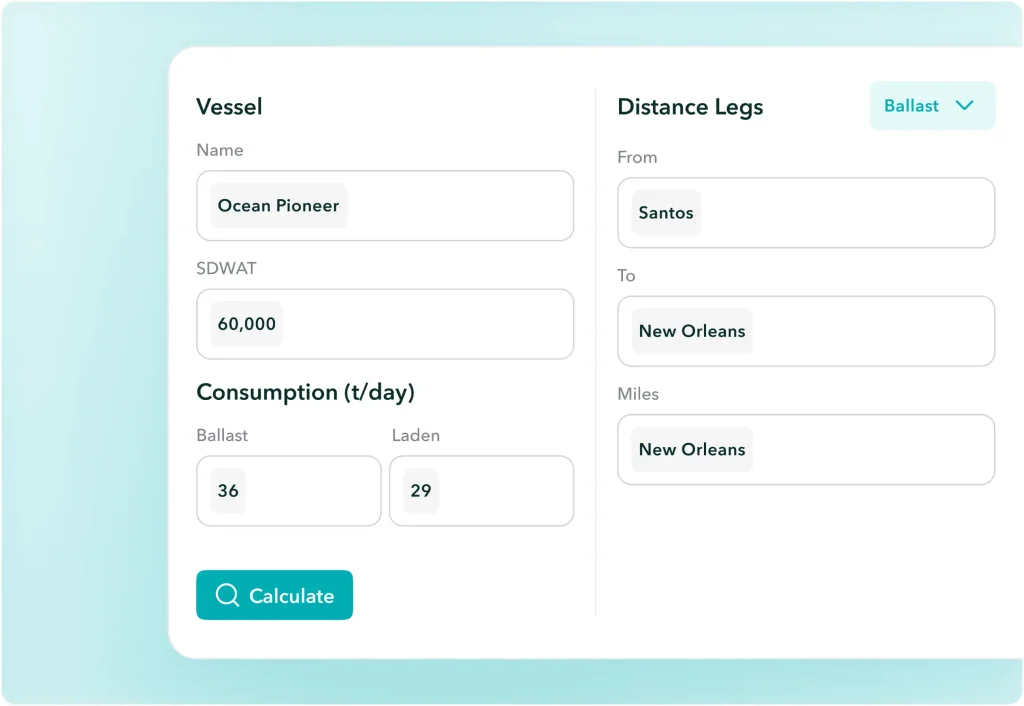
Summer deadweight, constants, bunkers on board and fresh water, because what matters is DWCC, not deadweight; then ballast and laden speeds, and consumption at sea, in port, on canal and idle, for fuel oil and diesel.
The Voyage
Legs marked ballast, laden or canal, and port calls typed load, top-off, discharge or other, because part-loading is ordinary in this trade. Distances can be entered by hand or pulled straight from the [sea route planner], so the mileage and the estimate always agree.
The Commercials
Cargo quantity, freight, commission, canal dues, extras, daily running cost and idle days. Commission takes 3.75 or 0.0375, whichever way it was sent to you.

What It Gives Back
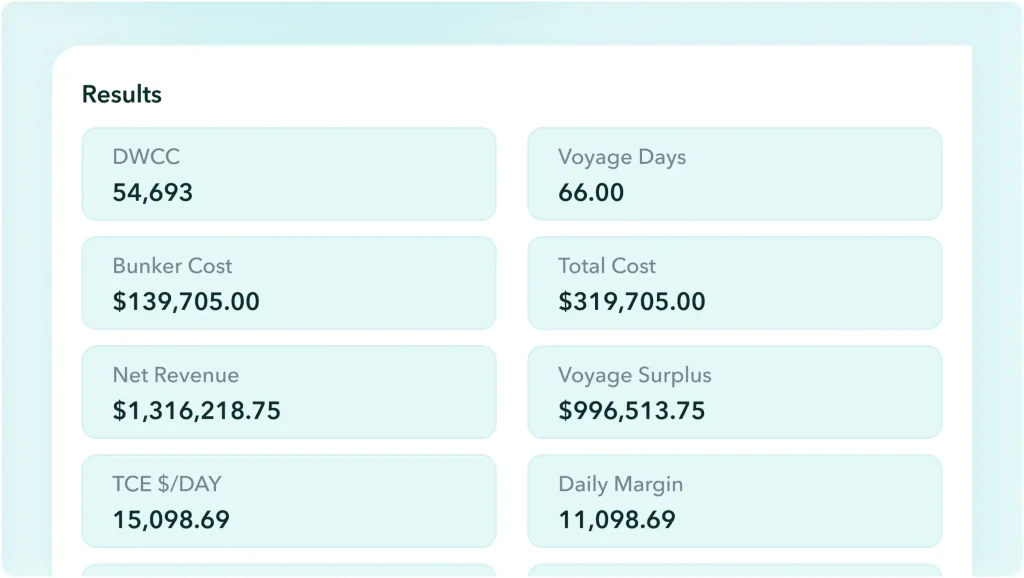
DWCC
The cargo she can genuinely lift, once constants, bunkers and fresh water come off her deadweight.
Voyage Days
Sea time, port time, canal transits and idle days, totalled honestly.
Bunker and Port Cost
Fuel priced by grade against consumption per mode, plus port charges, canal dues and extras.
Net Revenue and Voyage Surplus
The freight the cargo earns after commission, and what survives once the voyage has been paid for.
Daily Margin
The surplus spread across every day of the voyage. This is your time charter equivalent2, and it is what a period offer gets compared against.
Breakeven Freight
The rate per tonne at which the voyage stops paying.
Fuel-Oil Tonnes and CO2
What she burns, and what that emits, at the moment you decide rather than three weeks later in a report.
Run It Three Ways
Bunkers are the biggest variable cost in any voyage and the one you cannot fix when you fix the cargo. Scenario analysis takes any estimate as a baseline and runs freight up, fuel up and hire up beside it, with TCE, surplus and days side by side. One answer becomes a decision. Pricing an open charter listing rather than your own ship? Pull her particulars from the listing and the estimate starts already filled in.
Frequently Asked Questions
Have questions? We’re here to help.
What is the difference between a voyage estimator and a freight calculator?
A freight calculator multiplies a rate by a quantity. A voyage estimator prices the whole voyage capacity, distance, fuel by mode, port and canal costs, commission and running cost and returns a surplus and a daily earning. One tells you the invoice; the other tells you whether to fix.
How is breakeven freight calculated?
It is the rate per tonne at which the voyage exactly covers its own costs and earns nothing. Anything below it loses money, and ShipSearch returns it on every estimate.
What is DWCC?
Deadweight cargo capacity: the cargo a vessel can lift after constants, bunkers and fresh water come off her summer deadweight. Estimating on deadweight instead overstates intake.
Does it handle ballast legs?
Yes. Each leg is marked ballast, laden or canal, and consumption is applied per mode rather than averaged.
Run Your Next Fixture Through the Voyage Estimator
The cargo, the ship and the numbers behind one login. About two minutes to set up, nothing to pay.