
Laytime and Demurrage Calculator: Settle It on the Count
Nobody argues about the demurrage rate it is in the charterparty. What people argue about, sometimes for weeks, is which hours counted. The ShipSearch laytime and demurrage calculator rebuilds that count from the statement of facts and shows its workings
Laytime is the time the charterparty allows for loading and discharging, already paid for within the freight. Demurrage is what the charterer owes for every hour used beyond it, at an agreed daily rate. Despatch is the reverse money back for finishing early, customarily at half the demurrage rate. Which hours count is decided by the charterparty’s laytime terms, not by the calendar.
The Terms That Decide the Count
Two people can read the same statement of facts and land thousands of dollars apart. It is rarely bad faith they applied the exceptions differently. If the distinction itself is what you are after, we have a longer piece on laytime versus demurrage.
SHINC
Sundays and holidays included; the clock runs continuously.
SHEX
Sundays and holidays excepted; those hours come out.
WWD
Weather working days; time weather prevented work does not count.
Stoppages
Rain and other interruptions, entered with start and end times.
You get gross hours, excluded hours and used laytime back as three separate figures so when the other side disagrees, you can see which of the three they mean.

What Comes Back
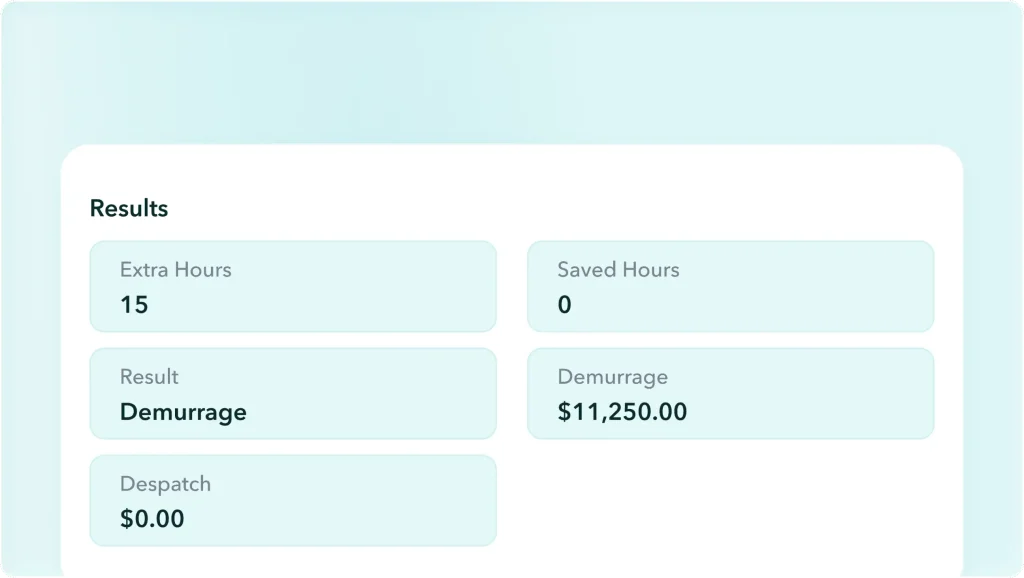
Used Laytime
The gross period from commencement to completion, less every hour the charterparty excludes.
Against Allowed
How far over or under the allowance you finished, in hours.
Demurrage
Time beyond the allowance, priced at the charterparty rate.
Despatch
Time saved, priced the same way and customarily at half the demurrage rate.
One principle settles most disputes: once on demurrage, always on demurrage. Laytime exceptions stop applying the moment the allowance runs out, so the Sunday that was excepted during laytime counts in full once demurrage has started unless the charterparty says otherwise in terms.
A Quick Check, and a Proper Count
The Quick Check
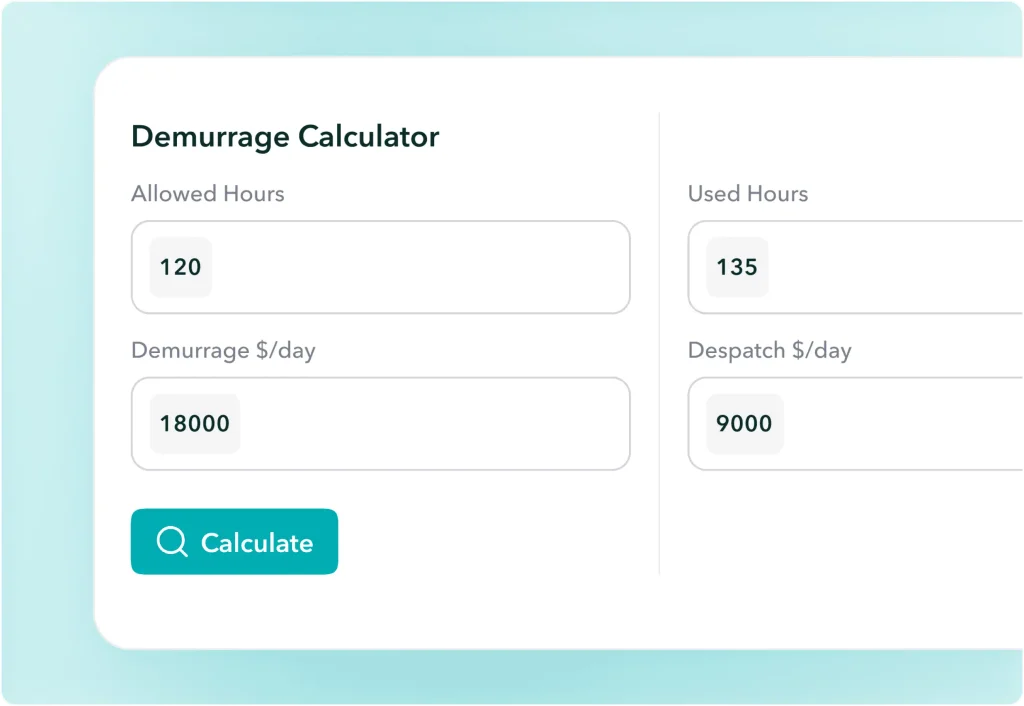
You are on the phone about a berthing sequence. Allowed hours in, used hours in, money out. Ten seconds
The Proper Count
The ship has sailed and the claim has to survive somebody else’s lawyer. Times, terms, allowed hours and every stoppage, returned broken into gross, excluded and used. There is a step-by-step demurrage worked example on the blog if you want to follow one through.
Port days you have already priced in the voyage estimator carry across, so the laytime you allowed and the port time you costed stay the same number.
Frequently Asked Questions
Have questions? We’re here to help.
What is the difference between laytime and demurrage?
Laytime is the allowance for cargo operations, paid for in the freight. Demurrage is the liability once that allowance is exceeded.
How do you calculate demurrage?
Work out how far past the allowance cargo operations ran, then price those hours at the charterparty’s demurrage rate. The hard part is never the pricing — it is establishing used laytime, which is what the calculator does.
What does SHEX mean?
Sundays and holidays excepted those periods are excluded from the count. SHINC is the opposite, with the clock running continuously.
Does bad weather count against laytime?
Under weather working days terms, no. Time weather prevented cargo work, or would have prevented it, is excluded.
Run the Next Claim Through the Laytime and Demurrage Calculator
One count, from the statement of facts, that both sides can check line by line.